How to use a custom box size calculator (the right way)
A custom box size calculator does two jobs for a US packaging buyer: it tells you how much your finished box will weigh (so you can predict shipping cost), and it tells you how much the box will cost to make at the quantity, material, and finish you want. Both are decisions you ideally make before you commission artwork — because artwork is cheap to redo, but a wrong box size is paid for on every shipment forever.
Why dimensions decide almost everything
Length × width × depth drives three downstream numbers: the sheet of board the box is cut from, the weight that ships, and the dimensional weight carriers bill. Shrinking a box by half an inch on each axis is one of the highest-ROI decisions a US DTC brand can make — it reduces board cost per unit and drops the box into a cheaper carrier rate band on every single order. Measure the product, add 1/8" to 1/4" of clearance on each axis, and send those internal dimensions to the printer.
Reading the weight output
- Per-box weight — the finished folded box plus a padding/insert allowance you select. Useful for setting ship rates on your Shopify or WooCommerce store.
- Total order weight — per-box × quantity. Useful for freight pallet planning on 2,500+ unit runs.
- Dimensional weight — US carriers compute dim weight as L × W × D ÷ 166 for domestic ground. For light products in right-sized boxes, dim weight usually loses to actual weight. For light products in oversized boxes, dim weight wins and you overpay.
- Billable shipping weight — the greater of actual and dimensional, which is what USPS, UPS, and FedEx actually invoice.
Reading the price output
Per-unit box cost in the US market is a function of five things: board area (dimensions), board grade (SBS vs kraft vs corrugated vs rigid), run quantity (long runs amortize make-ready across more units), print coverage (1-color vs full CMYK vs CMYK both sides), and finishing (foil, emboss, spot UV, soft-touch, window patch). The calculator above multiplies these together in roughly the same order a printer does when quoting, which is why the estimate tracks our firm quotes closely at typical US order sizes.
Material choice — the single biggest cost lever
For a given box footprint, the material you pick swings per-unit cost by 3× or more:
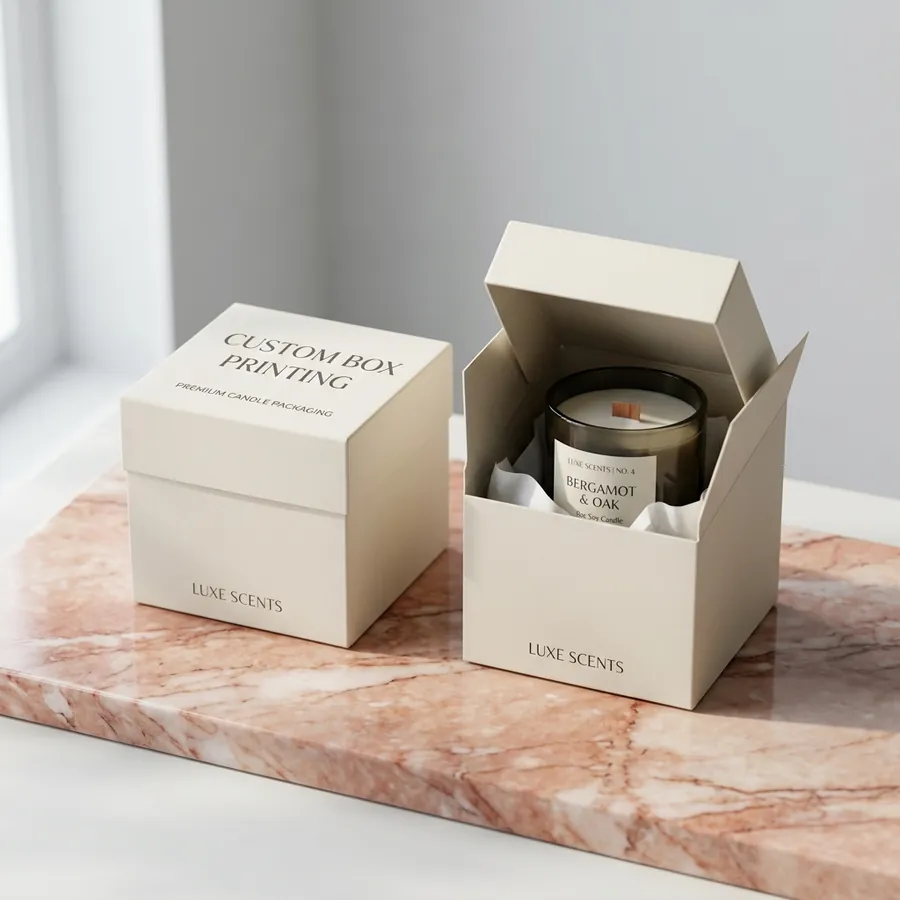
- Cardstock (12pt–24pt SBS or kraft) — the default for cosmetics, supplements, OTC, bakery, candles, and gift-card packaging. Lowest cost, prints the sharpest, MOQ 100. See custom boxes.
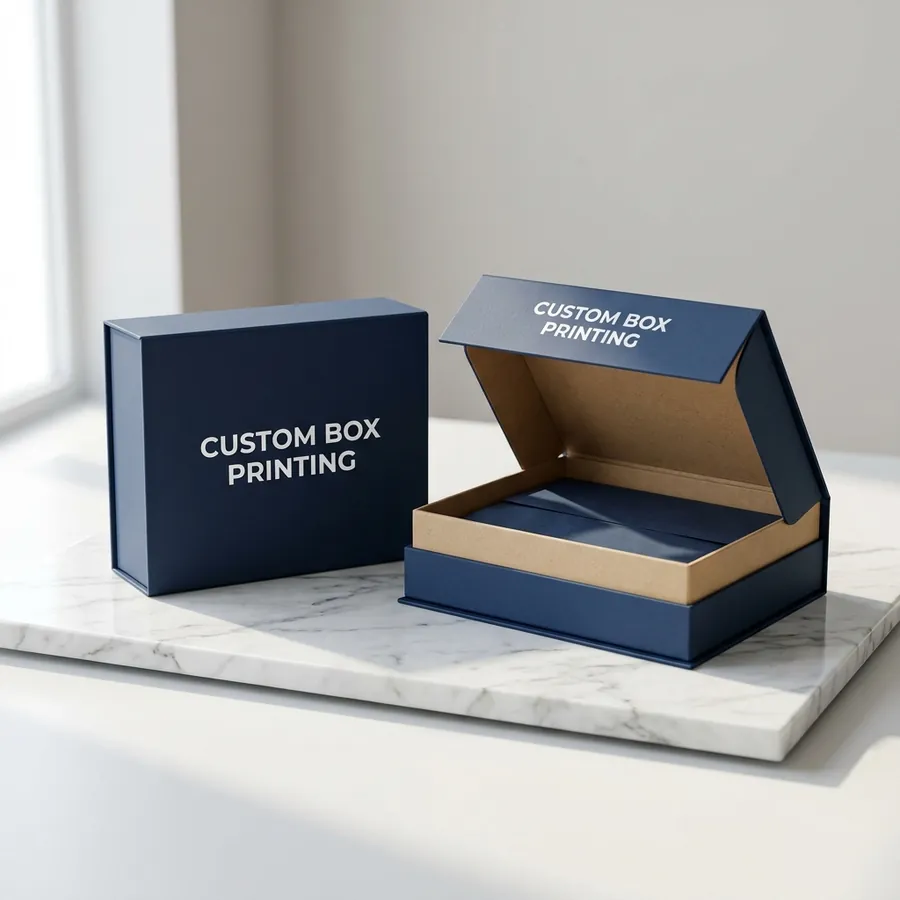
- Corrugated (E/B/EC-flute) — the default for mailer boxes, subscription boxes, and anything shipping on its own without an outer carton. Mid-cost, protective, MOQ 100. See mailer boxes.
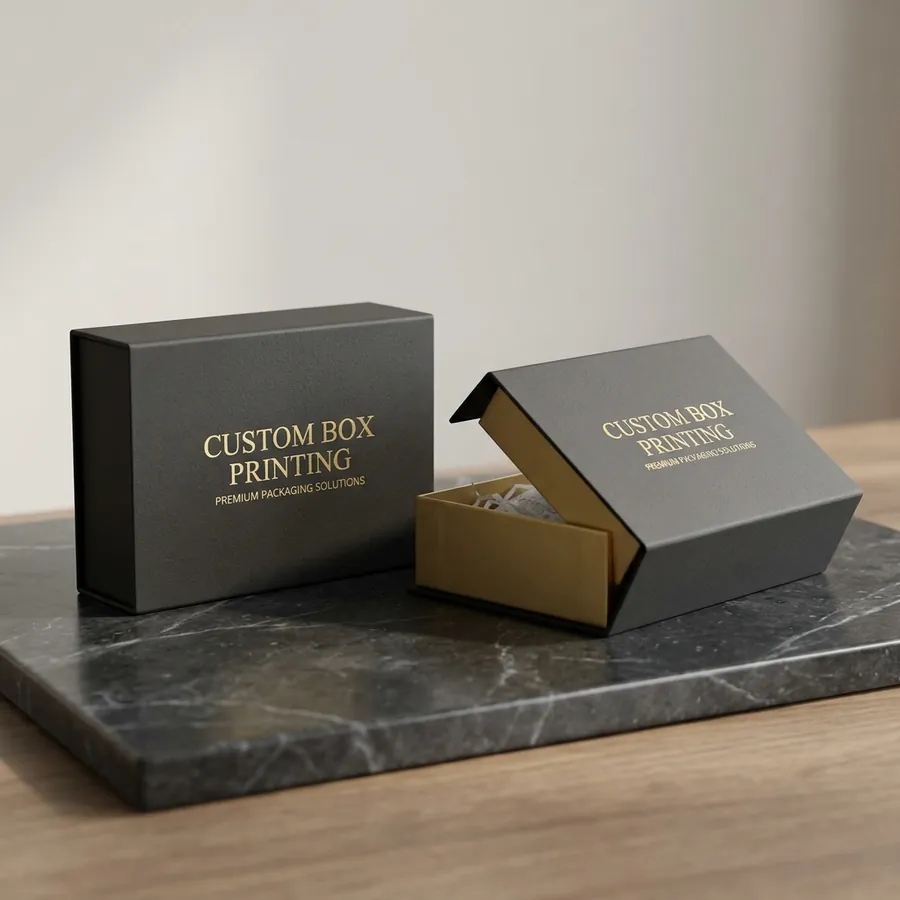
- Rigid setup (greyboard + wrap) — the default for premium cosmetics, jewelry, electronics, and launch kits. Highest cost, highest perceived value, MOQ 50. See rigid boxes.
Quantity breaks — why 500 units is the US sweet spot
Make-ready — the fixed cost of setting up the press — amortizes across every unit in the run. At 100 units it dominates per-unit cost; by 500 units it is cut by more than half; by 2,500 units it is a rounding error. For US brands launching a new SKU, 500 units is usually the point where per-unit price stops dropping dramatically. Below 500, the design flexibility is worth the premium; above 2,500, you are mostly paying for board.
Print and finish — where small spec choices move the price
- Going from 1-color to full CMYK typically adds about 8–12% at common US quantities.
- Lamination (matte or gloss) adds about $0.08–$0.14 per unit and improves scuff resistance on the way to the customer.
- Soft-touch lamination is the most-requested premium finish for cosmetic and launch kits — budget about $0.18–$0.25 per unit over standard lamination.
- Foil stamping, embossing, and spot UV each add about $0.10–$0.25 per unit depending on footprint. Stacking two or three finishes is standard on premium rigid and cosmetic boxes.
Shipping — the hidden half of your packaging cost
A US DTC brand often spends more shipping the box than making it. Three habits keep that cost in check: (1) size the box within 1/4" of the product on every axis, (2) prefer low-profile mailer constructions over cube-shaped shippers where the product allows, and (3) check dimensional weight before you commit to a size — the calculator above shows exactly how much dim weight you would pay on each box.
From estimate to firm quote
The numbers above are built from current US-market rates and are a good planning tool. For a firm quote you can place a PO against, send your spec through the quote form — exact dimensions, material, quantity, printing, and finish. We reply within one business day with firm pricing, a lead time, and a free 3D digital mockup so you can confirm the box visually before anything prints. Pre-production samples are $50 (refunded on your first order).
Keep going
- How to measure a custom box (L × W × D guide)
- How much do custom boxes cost in the US?
- Box material guide — kraft vs SBS vs corrugated vs rigid
- Compare all 15 box styles side-by-side
Frequently asked questions
What dimensions should I enter — internal or external?
Enter internal dimensions in inches (L × W × D). Internal is the usable space your product sits in. The calculator approximates external surface area from internal dimensions and board thickness.
How accurate is the weight calculator?
The estimate is typically within 5–10% of the finished box weight for folding cartons and corrugated mailers. Rigid setup boxes include a wrap-paper allowance and are usually within 10–15% because wrap, foam, and inserts vary.
What is dimensional weight and why does it matter?
US carriers (USPS, UPS, FedEx) bill by whichever is greater: actual weight or dimensional weight. Dim weight is length × width × depth ÷ 166 (domestic) in pounds. For light products in large boxes, dim weight is almost always what you pay.
Is the price estimate a firm quote?
No — it is a US-market range based on dimensions, material, quantity, printing, and finish. Firm pricing requires your artwork and exact spec. Send the quote form for an exact number within one business day.
What is the minimum order for a custom box?
100 units for folding cartons (cosmetic, food, bakery, CBD, mailer), 50 units for rigid setup boxes, and 5,000 units for printed paper (deli, butcher, tissue, kraft, sandwich wrap). No die, plate, or setup fees.
Do you ship custom boxes free in the US?
Yes — standard shipping is free anywhere in the contiguous United States on every order. Rush production and expedited shipping are available for an additional fee.
How long does production take?
Typical timeline is 1 business day for a quote, 1–2 days to approve a free 3D digital mockup, then 7–10 business days for production plus 2–5 business days for free US shipping.
Can I get a sample before I order?
Yes. We produce a custom pre-production sample for $50, which is refunded on your first production order. You see the exact box, in your material and finish, before you commit.