Pet Treat & Baby Food Box Packaging Basics (US)
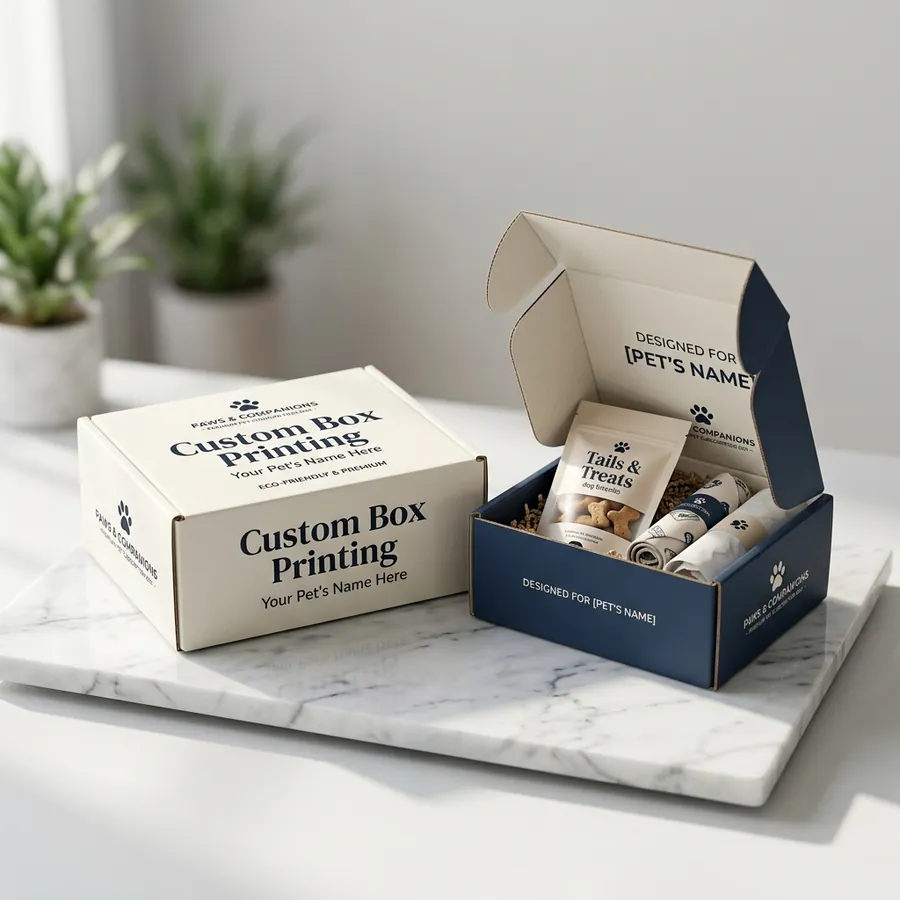
Pet and baby are two of the fastest-growing DTC packaging categories in the US. Both share a pattern: the outer carton is a trust document. Parents and pet owners read the label before they buy, and both categories are watched closely by regulators. Here is what the carton needs to carry for each.
Quick answer: labeling frameworks
| Category | Regulatory framework | Panel |
|---|---|---|
| Pet treats | AAFCO model rules + state feed control | Guaranteed analysis + ingredient list |
| Pet supplements | AAFCO + active-ingredient list | Same as treats + supplement facts |
| Baby food | FDA + FALCPA | Pediatric Nutrition Facts panel |
| Baby care (lotion, balm, wash) | FDA cosmetic + MoCRA | INCI ingredient list |
Pet treats: AAFCO is the ruleset
US pet food and treats are not regulated federally by FDA the same way human food is. Instead, they follow the AAFCO (Association of American Feed Control Officials) model rules, which state feed control offices adopt into law. The outer carton for pet treats typically needs:
- Statement of identity (product name + treat type + target species)
- Net weight in US customary + metric
- Ingredient statement in descending order by weight
- Guaranteed analysis — minimum protein, minimum fat, maximum fiber, maximum moisture (percentages)
- Feeding guidelines by pet body weight
- Manufacturer or distributor name and US address
- Best-by date + lot code (usually a hot-stamp zone)
- Barcode
For freeze-dried, functional, or unique-shape treats where visual sells the SKU, a front-panel window with PET film patch shows the treat color and shape — a common pattern that lifts shelf conversion.
Pet supplements: treats plus active ingredients
Pet supplements follow the same AAFCO framework as treats, plus active-ingredient callouts. Panel additions:
- Active ingredients per serving (glucosamine, MSM, chondroitin, probiotics, CBD if applicable)
- Condition-support language (joint, calming, dental, skin-and-coat, digestive)
- "Consult your veterinarian if pet is pregnant, nursing, or on medication" warning
For pet-CBD supplements sold in states that require child-resistant packaging, the outer carton typically sits around a CR-compliant inner package (a CR bottle or CR pouch). The folding carton itself is not CR-certified — that certification is for the inner package system.
Baby food: pediatric Nutrition Facts panel
Baby food outer cartons follow the FDA food framework, with a pediatric Nutrition Facts panel format for products marketed to children under 4 years old. Panel needs:
- Statement of identity (baby food type + flavor)
- Age-guidance icon (6+ months, 8+ months, 12+ months)
- Pediatric Nutrition Facts panel (21 CFR 101.9)
- Ingredient statement in descending order
- Allergen callout under FALCPA — "Contains: [allergen names]" for milk, egg, fish, shellfish, tree nuts, peanuts, wheat, soy, sesame
- Certification badges (USDA Organic, Non-GMO Project) if licensed — brand supplies the certifier's approved logo file
- Manufacturer or distributor name and US address
- Best-by date + lot code
- Barcode
For multi-pack outer cartons (4-pack, 6-pack, 12-pack of pouches or jars), the carton needs to hold the extra weight — 16-18 pt SBS with auto-bottom construction handles it.
Baby care: cosmetic framework applies
Baby care products (lotion, balm, diaper cream, wash, shampoo) follow the FDA cosmetic framework, so the panel needs an INCI ingredient list, US domestic contact under MoCRA 2024, net contents, and any warnings your formula requires. Baby-care buyers read the ingredient list closely — the panel needs to be legible under retail lighting, which is why matte lamination is worth adding on dense-panel SKUs.
Common structures across pet and baby
- Reverse tuck-end — everyday single-item carton (bottle, pouch, single treat pack)
- Auto-bottom — for heavier tubs, multi-packs, and bulk formats
- Sleeve-and-tray — for gift sets, starter kits, variety packs
- Window carton — for treats and soft-chew supplements where the shape or color sells the SKU
MOQ and cost
- MOQ: 100 cartons per SKU across pet and baby formats
- Per-unit: ~$1.90-$2.80 at 250 qty depending on board weight and format
- Turnaround: 8-10 US business days plus free contiguous-US shipping
- No plate, die, or setup fees
Related
Ordering custom boxes — common questions
What is the minimum order for custom boxes?
Runs start at 100 units for folding cartons (cosmetic, food, bakery, CBD, mailer), 50 units for rigid setup boxes, and 5,000 units for printed paper (deli, butcher, tissue, kraft, sandwich wrap). No die, plate, or setup fees at any quantity.
Do you ship custom boxes free in the US?
Yes — standard shipping is free anywhere in the contiguous United States on every order. Rush production (3–5 business days) and expedited shipping are available for an additional fee.
How long does a custom box order take?
Typical timeline is 1 business day for a quote, 1–2 days to approve a free 3D digital mockup, then 7–10 business days for production plus 2–5 business days for free US shipping. Rush production is available on request.
Can I see a sample before I commit to a full order?
Yes — free 3D digital mockup with every quote, and a physical sample on request (refunded on your first order) before you place a production run. You can also design and preview your box live in our free 3D box designer.
What artwork files do you need to start printing?
Print-ready PDF, AI, EPS, or PSD at 300 DPI in CMYK with 0.125" bleed is ideal. Don't have artwork? Our in-house design team builds your dieline and preps files at no cost — just send your logo and any brand references.
Do you charge setup, plate, or die-cutting fees?
No — there are no setup, plate, die, or tooling fees at any quantity. Custom dielines, artwork prep, 3D mockups, and physical samples are all included free with every order.