Recyclable vs Compostable vs Biodegradable Packaging: What's the Difference?
These three words sound alike, but they mean different things. Mixing them up can confuse buyers. It can even count as greenwashing. To pick the right green box, you need to know what each word means. This guide explains all three in plain words for US brands.
Quick answer: the difference in one line each
- Recyclable means it can be made into new products through a recycling system.
- Compostable means it breaks down into soil in a compost setting.
- Biodegradable means it breaks down in nature over time, with no set deadline.
For paper boxes, recyclable is usually the clearest claim.
What does recyclable mean?
Recyclable means the box can be collected and made into new products. Most paper boxes, kraft, and corrugated go in US curbside bins. The catch: it only counts if the local area accepts it. Remove tape, plastic windows, and liners first. See our kraft and recycled-content packaging boxes.
What does compostable mean?
Compostable means the box breaks down into healthy soil. There are two types. The home type breaks down in a backyard bin. The industrial type needs a special facility with high heat. Always say which type you mean. Most buyers only have a backyard bin.
What does biodegradable mean?
Biodegradable means the box breaks down in nature over time. The problem is the word has no fixed timeline. Something could take months or hundreds of years and still count. Because it is so vague, it is often used to greenwash. Use a clearer claim when you can.
Recyclable vs compostable vs biodegradable
| Term | What it means | Watch out for |
|---|---|---|
| Recyclable | Made into new products via recycling | Only if the local area accepts it; remove tape and liners |
| Compostable | Breaks down into soil when composted | Often needs a commercial composter, not a backyard bin |
| Biodegradable | Breaks down in nature over time | No set timeline; vague and easy to misuse |
Which one is best for my packaging?
For most US brands, widely recyclable paper is the safest, clearest choice. It is easy to act on, easy to prove, and widely accepted. Strong options include:
- Kraft boxes made from recycled or renewable fiber.
- Corrugated boxes for shipping, which are highly recyclable.
- Recycled-content and kraft stocks across cartons and printed paper.
Choose compostable only if you can tell buyers how to compost it.
Can an eco box still look premium?
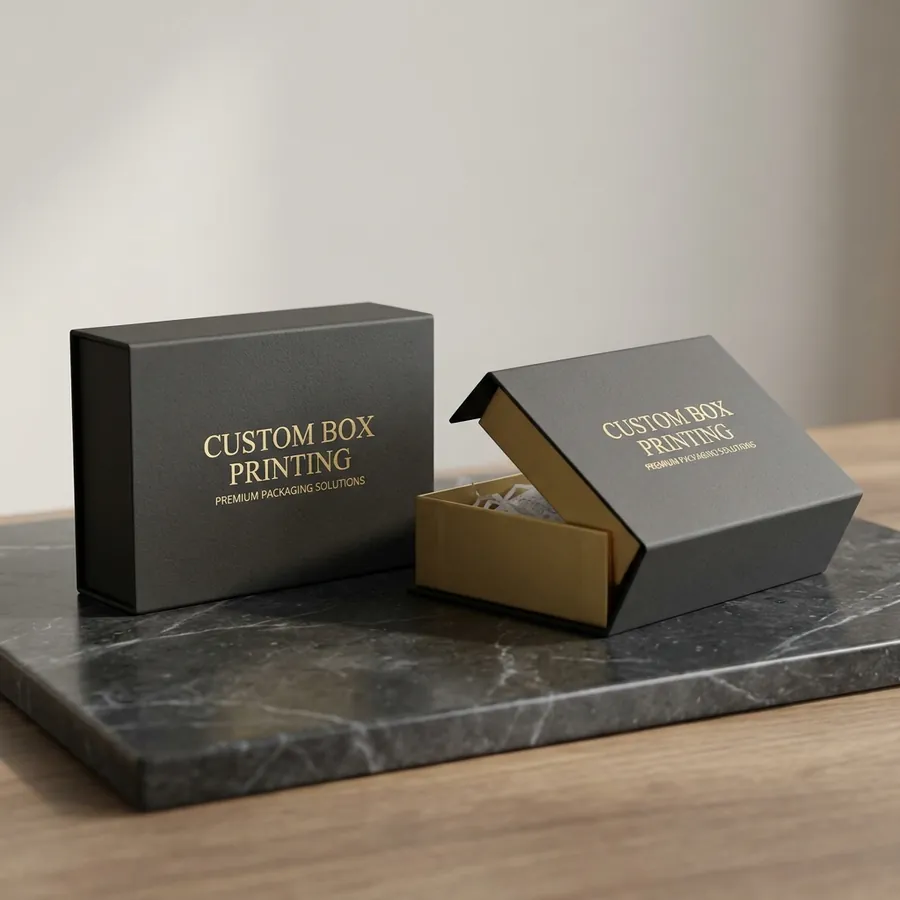
Yes. A recyclable box does not have to look plain. Recycled kraft, soft-touch coatings, foil, and embossing all work on eco stocks. So you can be green and still get a premium unboxing experience.
How do I avoid greenwashing?
Keep your claims clear and true. Say "widely recyclable" only if it really is. Name the stock, like "made from 100% recycled paper." Skip vague words like "eco" or "green" with nothing to back them. For a deeper look, read our eco-friendly packaging guide.
Frequently asked questions
What is the difference between recyclable and biodegradable?
Recyclable means it can be made into new products. Biodegradable means it breaks down in nature, but with no set timeline. For paper, recyclable is the clearer claim.
What does compostable mean?
It means the box breaks down into healthy soil. Many compostable items need a special facility, not a backyard pile, so check which type is required.
Is kraft paper recyclable?
Yes. Kraft and most paper boxes go in US curbside bins. Remove tape, windows, and liners first, since they lower how well the box recycles.
Is biodegradable packaging always eco-friendly?
Not always. The word is vague and has no set timeline, so it is easy to misuse. A recyclable or certified compostable claim is clearer and easier to prove.
What is the most eco-friendly box material?
Recycled and FSC-certified paper, kraft, and corrugated are strong picks. They are widely recyclable, made from renewable fiber, and still print and protect well.
Can recyclable boxes still look premium?
Yes. Recycled kraft, soft-touch coatings, foil, and embossing all work on eco stock, so a recyclable box can look just as rich as a standard one.
Want green packaging you can stand behind? Custom Box Printing makes widely recyclable kraft and recycled-content boxes from recycled-content and kraft stocks, with free design help, a sample (refunded on your first order), and free US shipping, starting at 100 units. Request a free quote and we will help you pick the right eco material.
Ordering custom boxes — common questions
What is the minimum order for custom boxes?
Runs start at 100 units for folding cartons (cosmetic, food, bakery, CBD, mailer), 50 units for rigid setup boxes, and 5,000 units for printed paper (deli, butcher, tissue, kraft, sandwich wrap). No die, plate, or setup fees at any quantity.
Do you ship custom boxes free in the US?
Yes — standard shipping is free anywhere in the contiguous United States on every order. Rush production (3–5 business days) and expedited shipping are available for an additional fee.
How long does a custom box order take?
Typical timeline is 1 business day for a quote, 1–2 days to approve a free 3D digital mockup, then 7–10 business days for production plus 2–5 business days for free US shipping. Rush production is available on request.
Can I see a sample before I commit to a full order?
Yes — free 3D digital mockup with every quote, and a physical sample on request (refunded on your first order) before you place a production run. You can also design and preview your box live in our free 3D box designer.
What artwork files do you need to start printing?
Print-ready PDF, AI, EPS, or PSD at 300 DPI in CMYK with 0.125" bleed is ideal. Don't have artwork? Our in-house design team builds your dieline and preps files at no cost — just send your logo and any brand references.
Do you charge setup, plate, or die-cutting fees?
No — there are no setup, plate, die, or tooling fees at any quantity. Custom dielines, artwork prep, 3D mockups, and physical samples are all included free with every order.