How to Choose Bakery Boxes: A Simple Guide for US Bakeries
The right bakery box keeps your treats fresh, safe, and looking great on the way to the customer. To choose one, you do four things: match the box to the product, pick a material, get the size right, and decide whether you want a window. This guide walks through each step in plain terms, built for US bakeries and home-based food businesses.
Quick answer: how to choose a bakery box
- Match the box to the product. A cake, a cupcake, and a cookie each need a different shape.
- Pick a food-safe material. Use food-safe board and grease-resistant stock for oily items.
- Get the size right. Measure the treat, then add a little room so it does not crush.
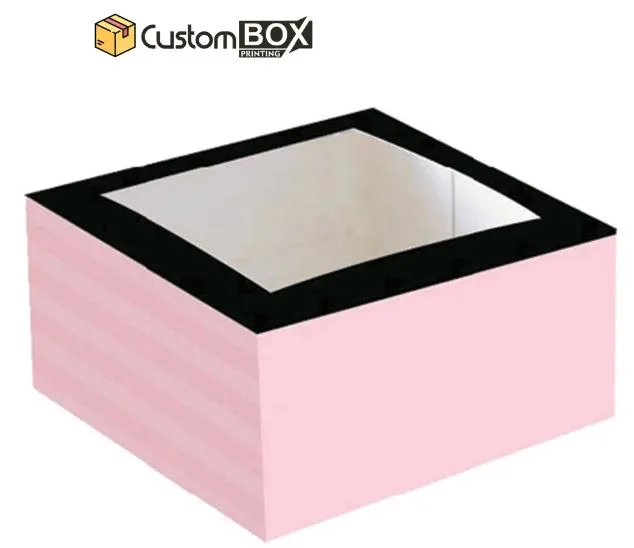
- Decide on a window. A window shows off the product; a closed box protects it more.
- Add your brand. Print your logo and colors so customers remember you.
What is a bakery box?
A bakery box is packaging made to hold baked goods. It protects the product, keeps it fresh, and shows off your brand. Bakeries use them for cakes, cupcakes, cookies, donuts, pastries, pies, macarons, and muffins. See the full range on our custom bakery boxes hub.
What types of bakery boxes are there?
Each baked good has a box built for its shape and weight. Here is a quick guide.
| Box type | Best for | Why it works |
|---|---|---|
| Cake boxes | Whole cakes | Tall, sturdy walls that bear weight and stack |
| Cupcake boxes | Cupcakes | An insert holds each cup so frosting stays intact |
| Cookie boxes | Cookies | Stacks and ships well for direct-to-customer sales |
| Donut boxes | Donuts | Dozen layout with grease-resistant board for glaze |
| Pastry boxes | Croissants, danishes | Grease-resistant and breathable so layers stay crisp |
| Pie boxes | Pies | Flat, heavy-round base for a safe, level carry |
| Macaron boxes | Macarons | A cavity insert cradles each fragile shell |
| Muffin boxes | Muffins | Room for domed tops and easy grab-and-go |
How do I choose the right bakery box?
Follow these five steps in order.
1. Match the box to the product
Start with the treat. A whole cake needs tall walls. Cupcakes need an insert. Pastries need grease-resistant board. Pick the box type from the table above.
2. Pick a food-safe material
Use food-safe board and soy-based inks. For greasy items like donuts and danishes, choose grease-resistant stock or a food-safe liner. You can also add liners and wraps from our printed paper range.
3. Get the size right
Measure the product's length, width, and height. Then add about a quarter inch on each side. This gives a snug fit without crushing. New to sizing? Read our guide on how to measure a custom box.
4. Decide on a window
A window box lets customers see the treat. This works well for decorated cakes, pastries, and colorful macarons. Skip the window if the product travels far or needs more protection from air.
5. Add your brand
Print your logo, colors, and a short message. Branded boxes get shared on social media and help customers find you again.
Kraft or white: which looks better?
Both look great; they just send a different message. Kraft reads as natural, organic, and artisan. White reads as clean and premium. Choose the one that fits your brand story.
How much do custom bakery boxes cost?
Cost depends on size, material, finish, and quantity. Bigger boxes and special finishes cost more. Larger orders cost less per box. Short runs start at 100 units with no setup or die fees. For a full breakdown, see how much custom boxes cost.
Can I ship baked goods in bakery boxes?
Use the bakery box as the retail box. For shipping, place it inside a sturdy corrugated mailer with padding. The mailer protects the bakery box and the treats in transit. This two-box method is what most online bakeries use.
Frequently asked questions
What is a bakery box?
A bakery box is packaging made to hold baked goods like cakes, cupcakes, cookies, and pastries. It protects the product, keeps it fresh, and carries your brand.
Are bakery boxes food-safe?
Yes. Quality bakery boxes use quality board and soy-based inks. For greasy items, choose grease-resistant board or a food-safe liner so the box does not soak through.
What size bakery box do I need?
Measure the product's length, width, and height, then add about a quarter inch on each side so it fits without crushing. Whole cakes need tall, sturdy walls. Cupcakes and macarons need an insert sized to the count.
Should a bakery box have a window?
A window helps when the look of the product sells it, such as decorated cakes, pastries, and colorful macarons. Skip the window for items that travel far or need more protection from air.
How much do custom bakery boxes cost?
Cost depends on size, material, finish, and quantity. Short runs start at 100 units with no setup or die fees, so a small bakery can order custom boxes without a large minimum.
Can I ship baked goods in bakery boxes?
Use the bakery box as the retail box, then place it inside a sturdy corrugated mailer with padding for shipping. The mailer protects both the box and the treats.
Ready to package your treats? Custom Box Printing makes custom bakery boxes for US bakeries, with free design help, a free 3D mockup, a sample (refunded on your first order), and free US shipping, starting at 100 units. Explore the wider food and beverage boxes range or request a free quote.
Ordering custom boxes — common questions
What is the minimum order for custom boxes?
Runs start at 100 units for folding cartons (cosmetic, food, bakery, CBD, mailer), 50 units for rigid setup boxes, and 5,000 units for printed paper (deli, butcher, tissue, kraft, sandwich wrap). No die, plate, or setup fees at any quantity.
Do you ship custom boxes free in the US?
Yes — standard shipping is free anywhere in the contiguous United States on every order. Rush production (3–5 business days) and expedited shipping are available for an additional fee.
How long does a custom box order take?
Typical timeline is 1 business day for a quote, 1–2 days to approve a free 3D digital mockup, then 7–10 business days for production plus 2–5 business days for free US shipping. Rush production is available on request.
Can I see a sample before I commit to a full order?
Yes — free 3D digital mockup with every quote, and a physical sample on request (refunded on your first order) before you place a production run. You can also design and preview your box live in our free 3D box designer.
What artwork files do you need to start printing?
Print-ready PDF, AI, EPS, or PSD at 300 DPI in CMYK with 0.125" bleed is ideal. Don't have artwork? Our in-house design team builds your dieline and preps files at no cost — just send your logo and any brand references.
Do you charge setup, plate, or die-cutting fees?
No — there are no setup, plate, die, or tooling fees at any quantity. Custom dielines, artwork prep, 3D mockups, and physical samples are all included free with every order.